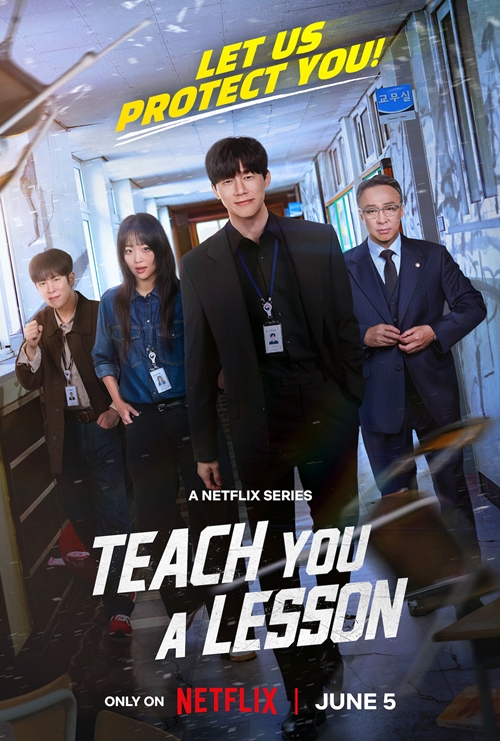
If you’re watching Teach You a Lesson and you paused during that tteokbokki scene wondering what on earth everyone was eating, I’ve got you. I’m Korean, I grew up eating this stuff after school, and I want to walk you through exactly what it is, why that scene hits so differently for Korean viewers, and how you can make the real thing at home.
The Scene That Has Everyone Asking About Tteokbokki
For anyone not caught up yet: Teach You a Lesson follows the Educational Rights Protection Bureau, a fictional government unit that steps in when schools spiral out of control. Two of its most-loved members are the no-nonsense Im Han-rim and her tech-savvy colleague Bong Geun-dae, and it’s during one of their cases — an undercover storyline tied to a youth gambling operation — that the tteokbokki scene happens (exact episode number pending confirmation — we’ll update this once verified).
Here’s the moment: Han-rim is supposed to be keeping watch while backup arrives, but a nearby street-food stall selling tteokbokki proves too tempting. She gets distracted just long enough for things to go sideways, and her colleague ends up in serious trouble as a result. As a Korean viewer, I can tell you this scene works precisely because it’s so relatable — tteokbokki really is that distracting. It’s the kind of dish that pulls you off task, that you smell from half a block away, that Koreans have been sneaking bites of instead of doing homework or, apparently, keeping watch, for generations. That’s exactly why the clip blew up on TikTok and why so many international fans ended up searching “what is tteokbokki” in the first place — you’re picking up on something every Korean already knows instinctively.
So, What Exactly Is Tteokbokki?
Let me properly introduce you. Tteokbokki (떡볶이) is one of Korea’s most iconic street foods: chewy, cylindrical rice cakes simmered in a sauce built around gochujang (Korean chili paste), which gives it that signature spicy-sweet flavor. Most versions also include fish cakes (eomuk), scallions, and sometimes a boiled egg or ramen noodles stirred in near the end.
You’ll find it everywhere in Korea — at bunsik (분식, casual snack food) stalls, pojangmacha street carts, convenience stores, and dedicated tteokbokki restaurants — and it’s been a fixture of Korean street food culture for decades. For most Koreans, it’s not just a snack; it’s tied to specific memories, usually of ducking into a stall with friends right after school let out. That’s part of why the show uses it the way it does — it’s shorthand for a very ordinary, very Korean kind of temptation.
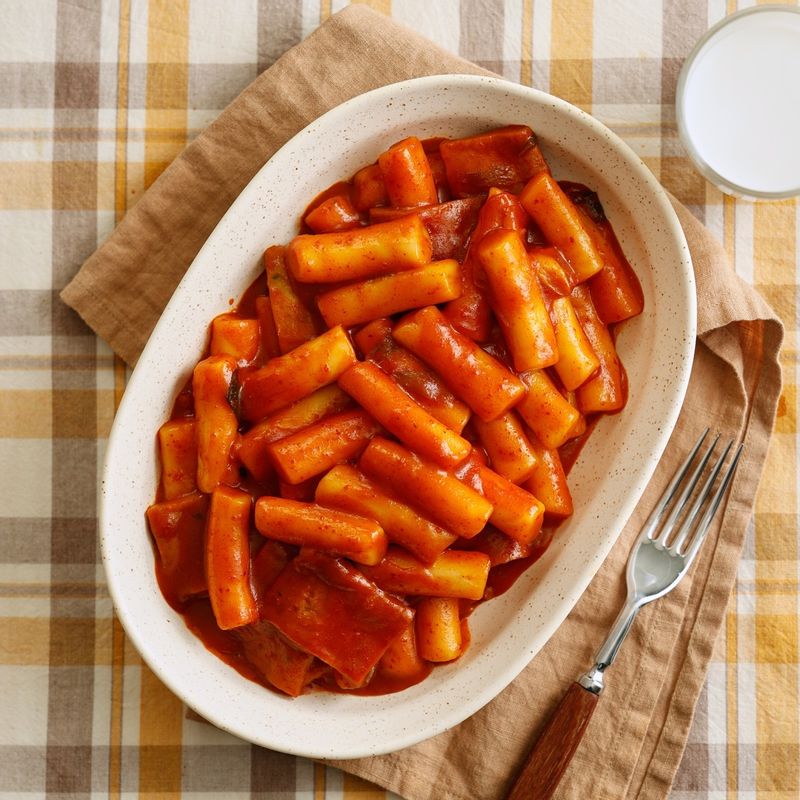
How to Make Tteokbokki at Home
You don’t need to fly to Seoul to try this — here’s the version I’d actually make for you if you came over. It takes about 20 minutes.
Ingredients
- 500g rice cakes (tteok), fresh or frozen
- 3 tbsp gochujang (Korean chili paste)
- 1 tbsp gochugaru (Korean chili flakes), adjust to taste
- 2 tbsp soy sauce
- 1 tbsp sugar
- 2 cups anchovy or vegetable stock
- 2 fish cakes, sliced
- 1 boiled egg (optional)
- 1 green onion, chopped
Step-by-Step Instructions
- If your rice cakes are hardened or refrigerated, soak them in warm water for about 10 minutes so they cook evenly.
- Bring the stock to a boil in a wide pan, then whisk in the gochujang, gochugaru, soy sauce, and sugar until fully dissolved.
- Add the rice cakes and sliced fish cakes, and simmer, stirring occasionally, until the sauce thickens and clings to the rice cakes — usually 10–12 minutes.
- Taste and adjust: more gochugaru for heat, more sugar to round it out. This is exactly how most Korean home cooks fine-tune it — there’s no single “correct” ratio.
- Top with chopped green onion and a halved boiled egg, and serve immediately while hot.
Don’t stress over precision here. If the sauce gets too thick, splash in a bit more stock; if it’s too thin, let it simmer a few extra minutes uncovered. This is comfort food, not fine dining.
Where to Eat Real Tteokbokki in Korea
If you’d rather have someone else make it for you, Seoul has no shortage of options — from legendary tteokbokki alleys to modern fusion spots. I’ve put together a full local’s guide to where to go and what to expect price-wise in Where to Eat Tteokbokki in Seoul, in case you’re planning a trip around your next K-drama marathon.
FAQ
Is tteokbokki very spicy? It depends on where you get it. The recipe above is medium-spicy and easy to adjust, and plenty of stalls in Korea offer milder versions for tourists and kids — you don’t need a high spice tolerance to enjoy it.
What does tteokbokki taste like if I’ve never had Korean food? Think chewy, mochi-like rice cakes in a sauce that’s spicy, a little sweet, and savory all at once. If you’ve had gnocchi in a spicy tomato sauce, imagine that texture with a Korean chili kick instead.
Can I make tteokbokki without gochujang? I wouldn’t recommend it if you want the real flavor — gochujang is what gives tteokbokki its depth and signature color. There are cream-based or soy-sauce (“gungjung”) variations that skip it, but they’re a genuinely different dish, not a substitute.
Is the tteokbokki in Teach You a Lesson a specific brand or homemade? From the scene itself, it looks like a street-stall version rather than a packaged brand — I’ll update this if any official behind-the-scenes details confirm otherwise.