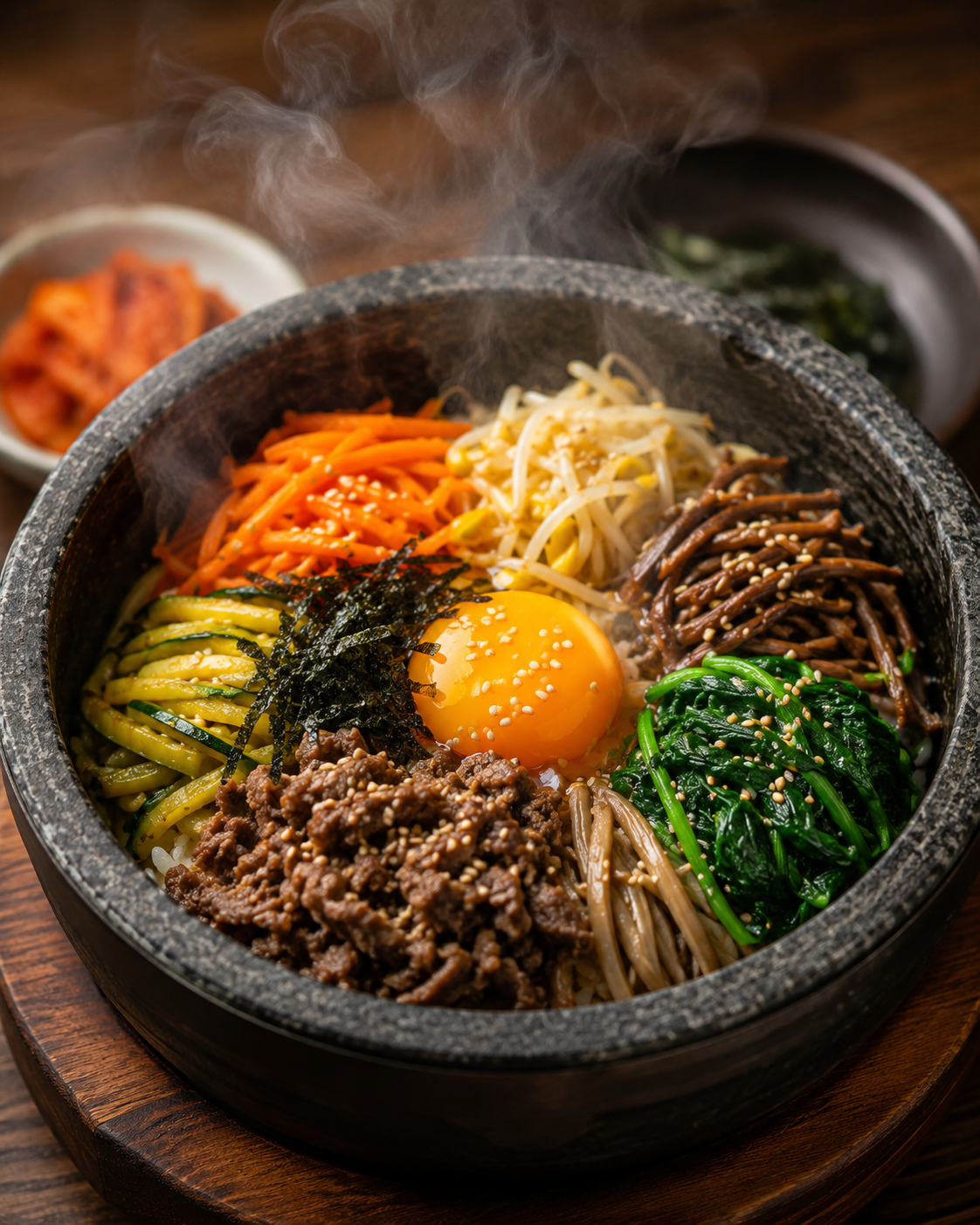
If you’ve had bibimbap (비빔밥) at a Korean restaurant and the bowl arrived hissing and crackling, that was the dolsot (돌솥) version. The stone bowl is the whole point. It toasts the bottom layer of rice into a crisp golden crust while you eat, and that crust is what people go back for.
Making dolsot bibimbap at home is not a difficult recipe. It’s a shopping problem first and a cooking problem second. So this guide is built the way I’d want it if I were starting from zero: what to actually buy, what you can skip, and then the recipe.
What Is Dolsot Bibimbap?
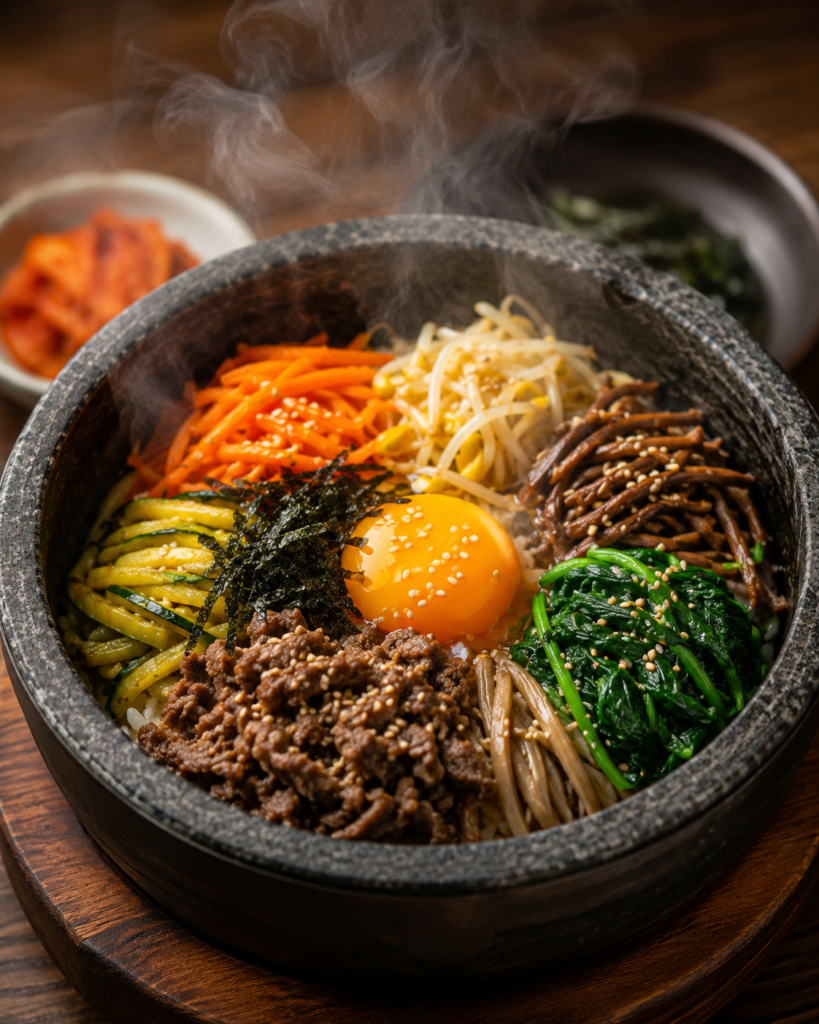
Bibim means mixed and bap means rice, so bibimbap is literally mixed rice — seasoned vegetables, usually some beef, an egg, and gochujang sauce, all stirred together before eating. Dolsot bibimbap uses a heavy stone bowl preheated until scorching hot; the rice crisps against the surface and forms a golden crackling layer called nurungji (누룽지).
It’s an everyday meal in Korea, not a special-occasion dish. Jeonju is the city most associated with it, and the toppings traditionally reflect whatever produce a region is known for, which is why no two recipes online look identical.
If bibimbap has been showing up on your feed, Netflix’s Culinary Class Wars (흑백요리사) is part of the reason. In the Black Spoon rounds of season 1, a Jeonju cook competing as Bibimbap King arrived in a royal robe and got judge Paik Jong-won singing along while he ate — one of the most-shared clips of the whole season. Season 2 kept the dish in rotation with a mackerel bibimbap in the opening round and a sea urchin-style version built from mideodeok (미더덕) later on. None of those were served in a stone bowl, which tells you something useful: bibimbap is a format, not a fixed recipe, and the dolsot version below is simply the one that gives you the crispy rice.
The Equipment: Start Here
The dolsot itself
This is the one purchase that changes the dish. Traditional granite dolsot bowls tolerate very high temperatures and stay hot for a long time, which is exactly what you need for the rice crust.
What to look for when buying:
- Weight. A real dolsot should be heavy and thick. Thin, light bowls don’t hold enough heat to crisp anything.
- A wooden base. Most sets include one. You need it — the bowl comes off the stove at a temperature that will scar a countertop.
- Size. Around 32 oz is the standard single-serving size sold online.
- Stone vs. ceramic. Some bowls sold as “dolsot” are glazed ceramic with a smooth dark surface. Those require a different seasoning method than raw stone, so check the listing before you follow any seasoning tutorial.

Korean granite dolsot stone bowl with wooden base
Buy two if more than one person eats. Serving one sizzling bowl and one sad microwaved bowl doesn’t go over well.
Heat protection
The bowl stays dangerously hot for a long time after it leaves the stove. Handle it with silicone or thick gloves — regular thin oven mitts aren’t enough contact protection for gripping a small round bowl.
silicone heat-resistant kitchen gloves
What you can skip
You don’t need a rice cooker, though it makes the rice step hands-off. You don’t need a special pan for the vegetables — one skillet, wiped between batches, is how most home cooks do it.
And you don’t strictly need the dolsot to make bibimbap at all. The dish works with or without a traditional stone bowl, and a cast iron skillet is the standard workaround if you already own one. You just won’t get the tableside sizzle.
Seasoning Your New Dolsot (Do This First)
A brand-new stone bowl arrives with a powdery residue from grinding and needs seasoning before its first meal.
- Wash the bowl in plain water to remove the surface powder. Skip soap — the porous stone absorbs it.
- Soak rice in water for 20 minutes and reserve the cloudy soaking liquid in a pot large enough to hold the bowl. Lower the bowl in and top up with water so it’s fully submerged. Add a couple of tablespoons of sea salt, let the temperatures even out for a few minutes, then bring to a boil over medium heat.
- Pour the water out and wipe the bowl with paper towels. Once it’s completely dry, brush the inside with sesame oil until the stone stops absorbing it, then wipe away the excess.
The rule that matters most: heat the bowl gradually, never add cold liquid to a hot bowl, let it cool naturally before washing, and never put a hot bowl into cold water. Thermal shock is what cracks these, not normal cooking.
[IMAGE: Sesame oil being brushed into a dry stone bowl with a pastry brush]
The Shopping List
Buy online or at a Korean market
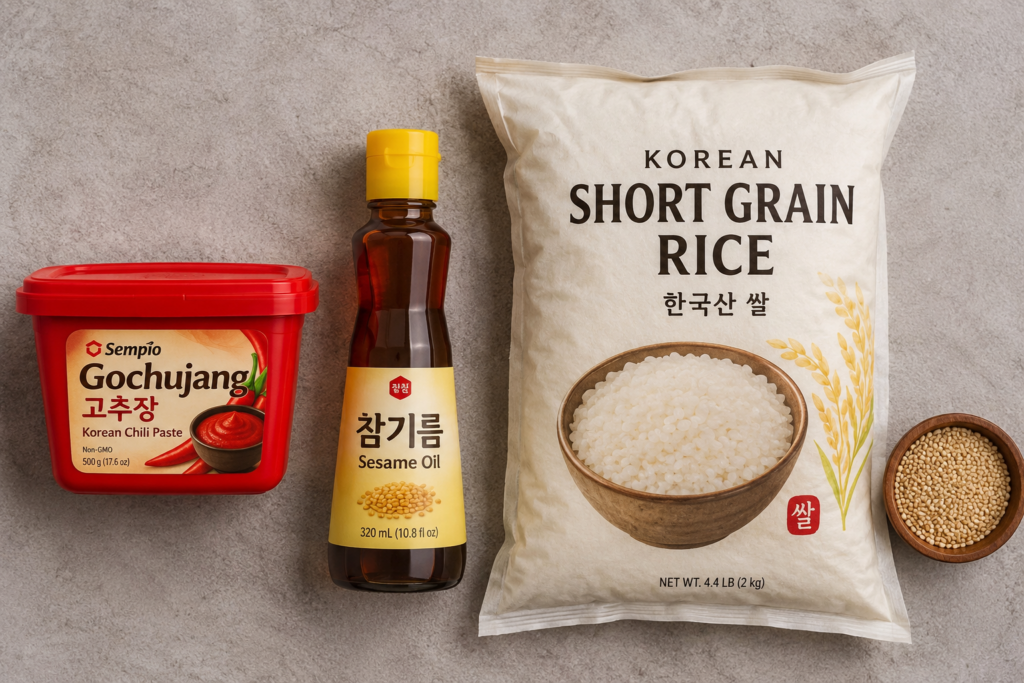
Gochujang (고추장) — the fermented red chili paste that defines the sauce. There’s no clean supermarket equivalent. America’s Test Kitchen notes that sriracha can stand in at equal volume, but the flavor profile is genuinely different and sriracha is thinner, so cut the water from your sauce. Treat that as an emergency measure, not a plan.
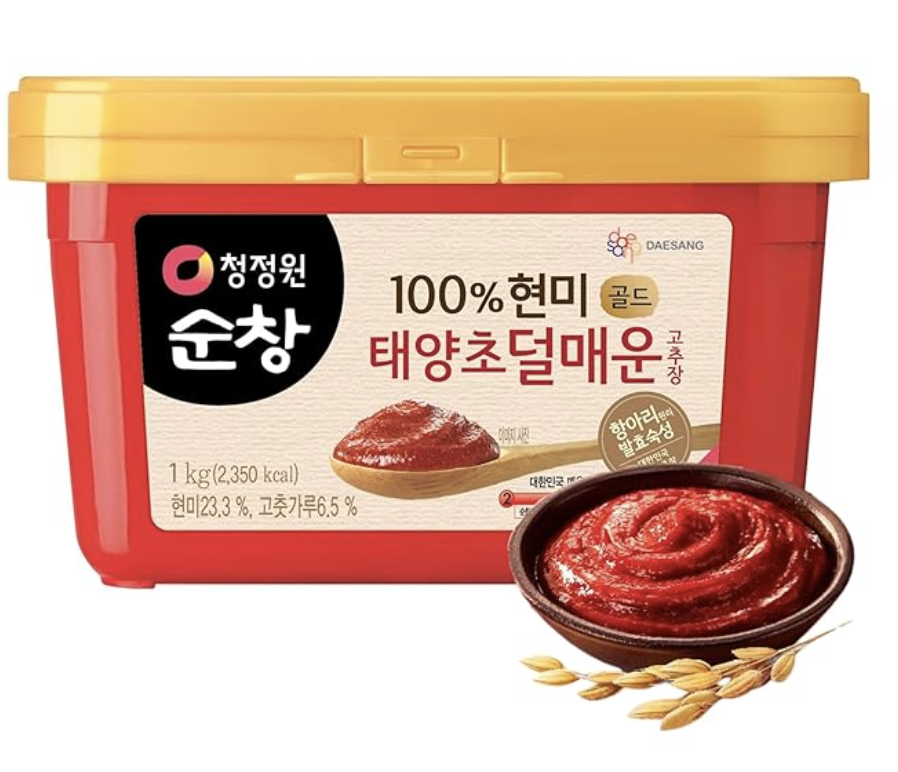
gochujang Korean red chili paste
Toasted sesame oil — not the pale neutral kind. Toasted sesame oil is what coats the bowl; its low smoke point and nutty flavor are what build the nurungji crust and the base flavor. This is the single most-used bottle in Korean home cooking, so buy a real-size one.
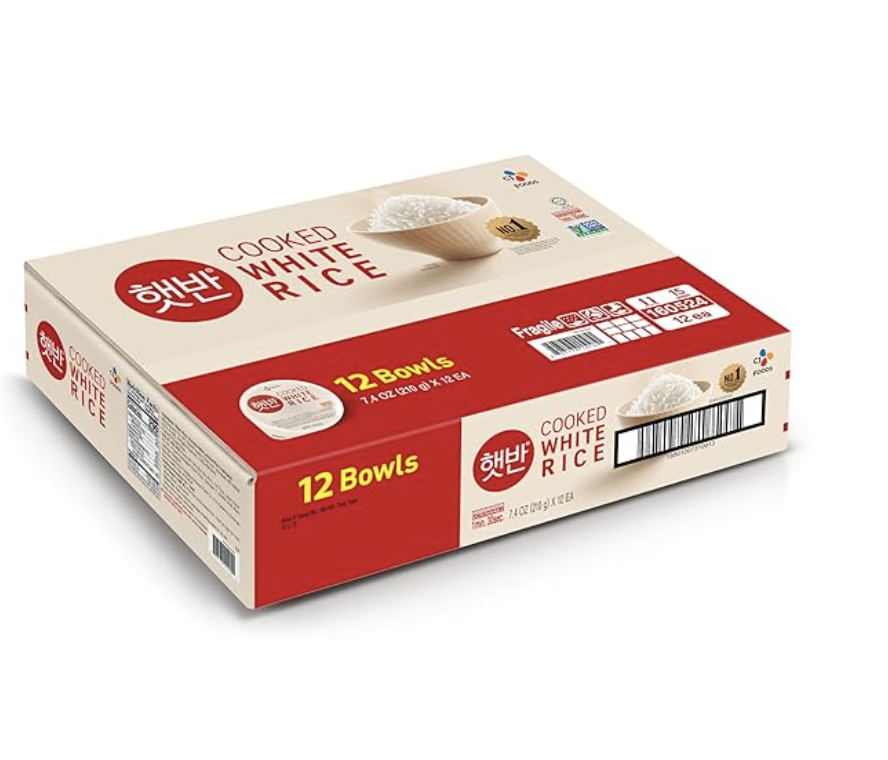
Short-grain rice — Koreans typically use short-grain white rice, and if you can’t find it, any rice works; cook it with slightly less water than the package says so it’s a little drier than usual. Drier rice absorbs the sauce better and crisps more willingly. Sushi rice is short-grain and works fine.
If you want a more convenient option, using Hetbahn is a good choice.
Toasted sesame seeds — used in the sauce and on nearly every vegetable. Cheap, and you’ll go through them.
Buy at a normal grocery store
Spinach, carrots, zucchini, bean sprouts, shiitake or button mushrooms, garlic, soy sauce, sugar, eggs, and beef (any tender quick-cooking cut). A modernized version using only regular supermarket vegetables is entirely legitimate — you don’t need a Korean grocery run for the produce.
Substitutions for the hard-to-find stuff
Traditional bibimbap includes two dried mountain vegetables that stop most people cold.
| Traditional ingredient | Why it’s hard | Substitute |
|---|---|---|
| Gosari (고사리), dried fernbrake | The ingredient most likely to need a substitute outside Korea or Asian groceries | Thinly sliced king oyster mushroom cooked with soy sauce and sesame oil gives a similar chewy, earthy character |
| Doraji (도라지), bellflower root | Rarely stocked outside Korean markets | Thinly sliced parsnip, salted and rinsed first to cut the bitterness |
| Gochujang | Not in every supermarket yet | Equal amount of sriracha, with the water omitted from the sauce — different, but workable |
| Short-grain rice | Depends on your area | Any rice you have, cooked with less water |
Honestly, skipping gosari and doraji entirely is what most home cooks do. The dish is still bibimbap.
Dolsot Bibimbap Recipe (Serves 2)
Prep: 40 minutes · Cook: 15 minutes
Ingredients
- 2 cups cooked short-grain rice, slightly on the dry side
- 200g beef, thinly sliced (freeze 30–60 minutes first to slice it thin)
- Beef marinade: 1 tbsp soy sauce, 1 tsp sugar, 1 tsp sesame oil, 1 clove minced garlic, black pepper
- 1 cup spinach
- 1 carrot, julienned
- 1 small zucchini, in half-moons
- 1 cup bean sprouts
- 4 shiitake mushrooms, sliced
- 2 eggs
- Toasted sesame oil, salt, garlic, sesame seeds for seasoning the vegetables
- Sauce: 2 tbsp gochujang, 1 tbsp sesame oil, 1 tsp sugar, 1 tsp vinegar, 1 tsp sesame seeds
Instructions
- Marinate the beef. Mix it with the marinade and refrigerate while you handle everything else.
- Cook the rice and keep it warm.
- Prep the vegetables separately. Each vegetable is blanched or stir-fried and seasoned on its own — this is the tedious part and it’s also the part that makes it taste right. Blanch the spinach about a minute, drain, squeeze out water, then toss with garlic, salt, and sesame oil. Sauté carrot, zucchini, and mushrooms in turn, salting each lightly. Blanch the bean sprouts and season the same way as the spinach.
- Cook the beef in a hot pan until just done.
- Mix the sauce ingredients in a small bowl.
- Heat the dolsot on low for 10 minutes. It must be low heat or the bowl can crack.
- Oil and fill. Brush the inside — bottom and sides — with about a tablespoon of sesame oil, then add the rice and flatten it into an even layer.
- Let the crust form. Give it at least 5 full minutes. When the crackling starts to slow down, it’s ready.
- Top and serve. Arrange the vegetables and beef over the rice, add the egg in the center, spoon the sauce on, and bring it to the table. Mix everything hard before eating, and scrape the bottom.
Three Mistakes That Ruin It
Rushing the crust. Five minutes feels long when you’re hungry. Pull it early and you get warm rice, not nurungji.
Using freshly cooked, wet rice. Day-old refrigerated rice is drier and takes on the sauce better. The drier texture is exactly why it absorbs sauce well.
Blasting the heat. The instinct is to crank the burner for maximum sizzle. Preheat on low to medium-low — the bowl retains heat so well that high heat isn’t necessary, and it’s the fastest way to crack a bowl you just bought.
Storage and Serving
Bibimbap is best fresh, but the components keep: rice, cooked vegetables, and protein in separate airtight containers for up to 3 days, and the sauce in a jar in the fridge for about a week. That makes it a good Sunday-prep dish — reheat the toppings and assemble in a freshly heated bowl.
Serve with kimchi and a simple soup on the side if you want the full setup. Nothing else is required.
FAQ
Do I really need a dolsot? No. The dish works without one, and a cast iron skillet gets you a decent crust. But the stone bowl is what makes it dolsot bibimbap specifically, and it’s a one-time purchase under most budgets.
Is dolsot bibimbap spicy? Mild, and you control it. The heat comes entirely from the gochujang sauce you add at the table, so start with less and stir in more.
Raw egg yolk or fried egg? Both are normal. Restaurants usually use a raw yolk because the bowl is hot enough to cook it as you mix. If your bowl isn’t screaming hot or you’d rather not, a sunny-side-up egg is the common home version.
Can I make it vegetarian? Yes — drop the beef and add tofu or extra mushrooms. Check your gochujang label, as some brands vary in what goes in.
This post contains affiliate links. If you buy through them, I may earn a small commission at no extra cost to you.