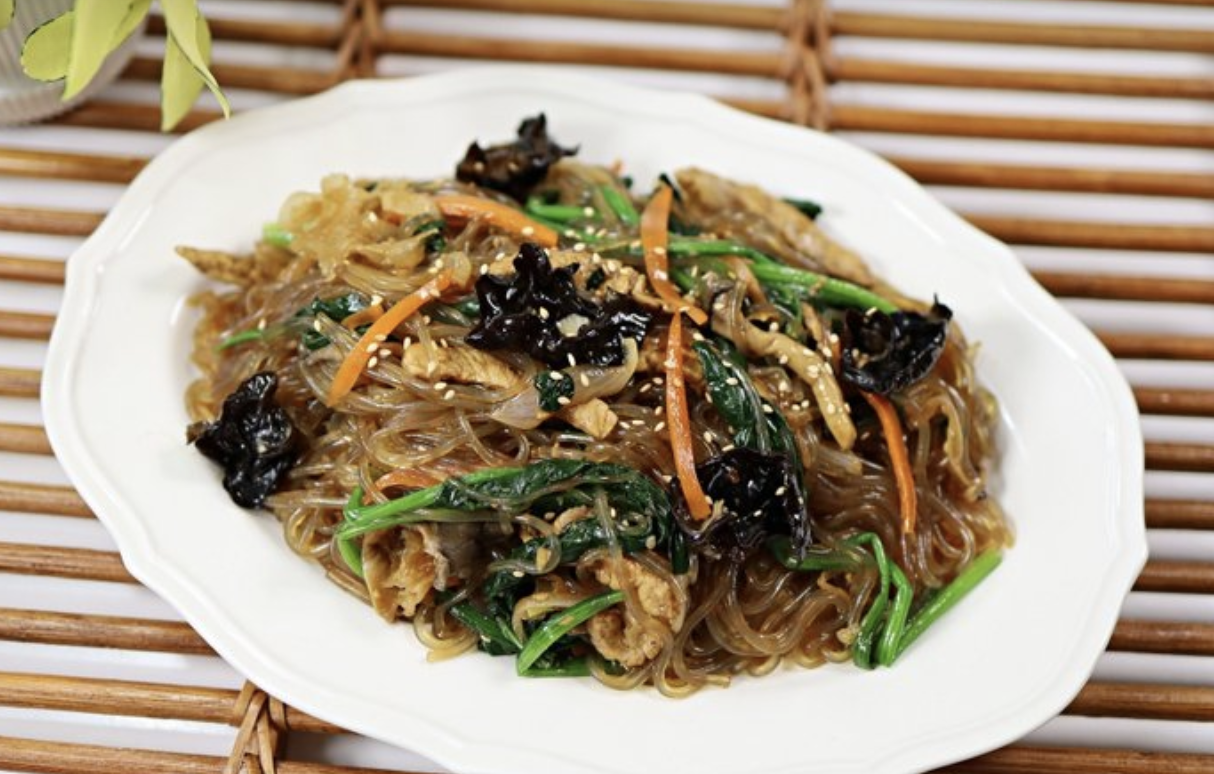

Intro
Japchae (잡채) is one of those Korean dishes that looks intimidating and isn’t. It’s stir-fried glass noodles with vegetables and usually a little beef, tossed in a soy-sesame sauce that’s savory with just a touch of sweetness. The first few times I made it, the noodles turned into a sticky clump and I couldn’t figure out why. Turns out the fix is mostly about ingredients and timing, not skill. This japchae recipe walks through the real method, plus what to substitute if you can’t find everything at a regular US grocery store.
What Is Japchae?
Japchae literally translates to “mixed vegetables,” even though the noodles are really the star. It’s made with dangmyeon (당면), noodles made from sweet potato starch, not the wheat or rice noodles you’d find in other Asian dishes. That’s actually the key to the texture — dangmyeon stays chewy and slightly springy even after sitting in sauce, while rice noodles go soft and mushy. Japchae shows up at Korean birthdays, holidays like Chuseok, and pretty much any potluck-style gathering, usually served at room temperature rather than piping hot.
Ingredients (4 servings)
For the noodles and sauce:
- 8 oz dangmyeon (Korean sweet potato glass noodles) — [AMAZON: dangmyeon sweet potato glass noodles]
- 3 tbsp soy sauce
- 1 tbsp sugar
- 1 tbsp toasted sesame oil, plus extra for tossing — [AMAZON: toasted sesame oil]
- 1 clove garlic, minced
- 1/4 tsp black pepper
For the vegetables and beef:
- 4 oz beef (ribeye or sirloin, thinly sliced) — skip for a vegetarian version
- 1 small carrot, julienned
- 1/2 onion, sliced thin
- 1 red bell pepper, julienned
- 3-4 dried shiitake mushrooms, rehydrated and sliced (or fresh shiitake)
- 3 cups spinach
- 2-3 scallions, cut into 2-inch pieces
- Vegetable oil for cooking
- Toasted sesame seeds, for garnish
Substitutions
| Hard to find | Easier swap |
|---|---|
| Dangmyeon (sweet potato noodles) | Don’t substitute this one if you can — it’s the whole point of the dish. Order it online if your local store doesn’t carry it. |
| Shiitake mushrooms | Cremini or button mushrooms (different flavor, but works) |
| Korean soy sauce | Any regular soy sauce works; low-sodium is fine too |
| Fresh spinach | Baby spinach or a thawed, well-drained bag of frozen spinach |
| Beef ribeye | Any quick-cooking beef cut, or thinly sliced chicken thigh |
Equipment You’ll Need
- A large wok or wide skillet. You’ll be tossing a lot of noodles and vegetables, so a regular small pan makes this harder than it needs to be. A wide, flat-bottom wok works well on both gas and electric stoves — [AMAZON: carbon steel stir-fry wok]
- Kitchen scissors. Dangmyeon noodles get long and unwieldy once cooked. Korean cooks usually cut them right in the pan with scissors instead of a knife — [AMAZON: kitchen shears for cooking]
- A large pot for boiling the noodles (any stockpot works, nothing special needed)
- A colander for draining
Step-by-Step Instructions
- Rehydrate the mushrooms. If using dried shiitake, soak them in warm water for 20-30 minutes until soft, then slice thin. Save the soaking liquid — a splash can go into the sauce for extra flavor.
- Marinate the beef. Toss the sliced beef with a splash of soy sauce, a pinch of sugar, and a little sesame oil. Let it sit while you prep the vegetables.
- Boil the noodles. Cook the dangmyeon in boiling water for 6-8 minutes, until chewy but not mushy — check a strand at the 6-minute mark. Drain and immediately toss with a little sesame oil so they don’t stick together.
- Cook the vegetables separately. Stir-fry the carrot, onion, and bell pepper together with a pinch of salt until just softened, about 2 minutes. Set aside. Wilt the spinach on its own for 30 seconds, squeeze out excess water, and set aside. Cooking each vegetable separately keeps the colors distinct and avoids a watery, overcooked mix.
- Cook the mushrooms and beef. Stir-fry the mushrooms until browned, then cook the marinated beef until just done, about 2-3 minutes.
- Combine everything. In the same pan, add the noodles, soy sauce, sugar, and a little sesame oil. Toss over medium heat for a minute so the noodles absorb the sauce. Add the vegetables, beef, and scallions, and toss everything together.
- Cut the noodles down. If the noodles are unwieldy, use your kitchen scissors right in the pan to cut them into shorter, more manageable lengths.
- Finish and serve. Taste and adjust — a little more soy sauce for saltiness, a little more sugar if it needs balance. Top with sesame seeds and serve warm or at room temperature.
Common Mistakes
- Boiling the noodles too long. Dangmyeon goes from chewy to gummy fast. Start checking a minute or two before the package says it’s done.
- Cooking all the vegetables together in one pan. It’s tempting to save time, but everything releases water at a different rate and you end up with soggy, colorless vegetables instead of distinct crisp-tender ones.
- Skipping the sesame oil right after draining. This is the easiest way to prevent the noodles from turning into one giant clump before you even get to the sauce step.
Storage & Serving
Japchae keeps well in the fridge for 3-4 days in an airtight container. It’s traditionally served at room temperature, so you don’t need to reheat it, though a quick 20-second zap in the microwave loosens up the noodles if they’ve stiffened. It pairs well with steamed rice and a simple soup, or works on its own as a potluck side.
FAQ
Is japchae spicy? No. Japchae is savory-sweet, not spicy — there’s no gochujang or chili in the traditional recipe. If you’re looking for a spicy Korean noodle dish, that’s more the territory of bibim guksu or jjajangmyeon’s spicier cousins.
Can I make japchae vegetarian or vegan? Yes, just leave out the beef and use a mushroom or extra-vegetable mix instead — some people add tofu for protein. Double check your soy sauce brand if you’re strictly vegan, since a few contain trace animal products.
Can I use rice noodles instead of dangmyeon? You can, but it won’t really be japchae anymore — rice noodles get soft and starchy instead of staying chewy, and they don’t hold the sauce the same way. If you can only find rice noodles locally, ordering dangmyeon online is worth it for this dish specifically.
This post contains affiliate links. If you buy through them, I may earn a small commission at no extra cost to you.