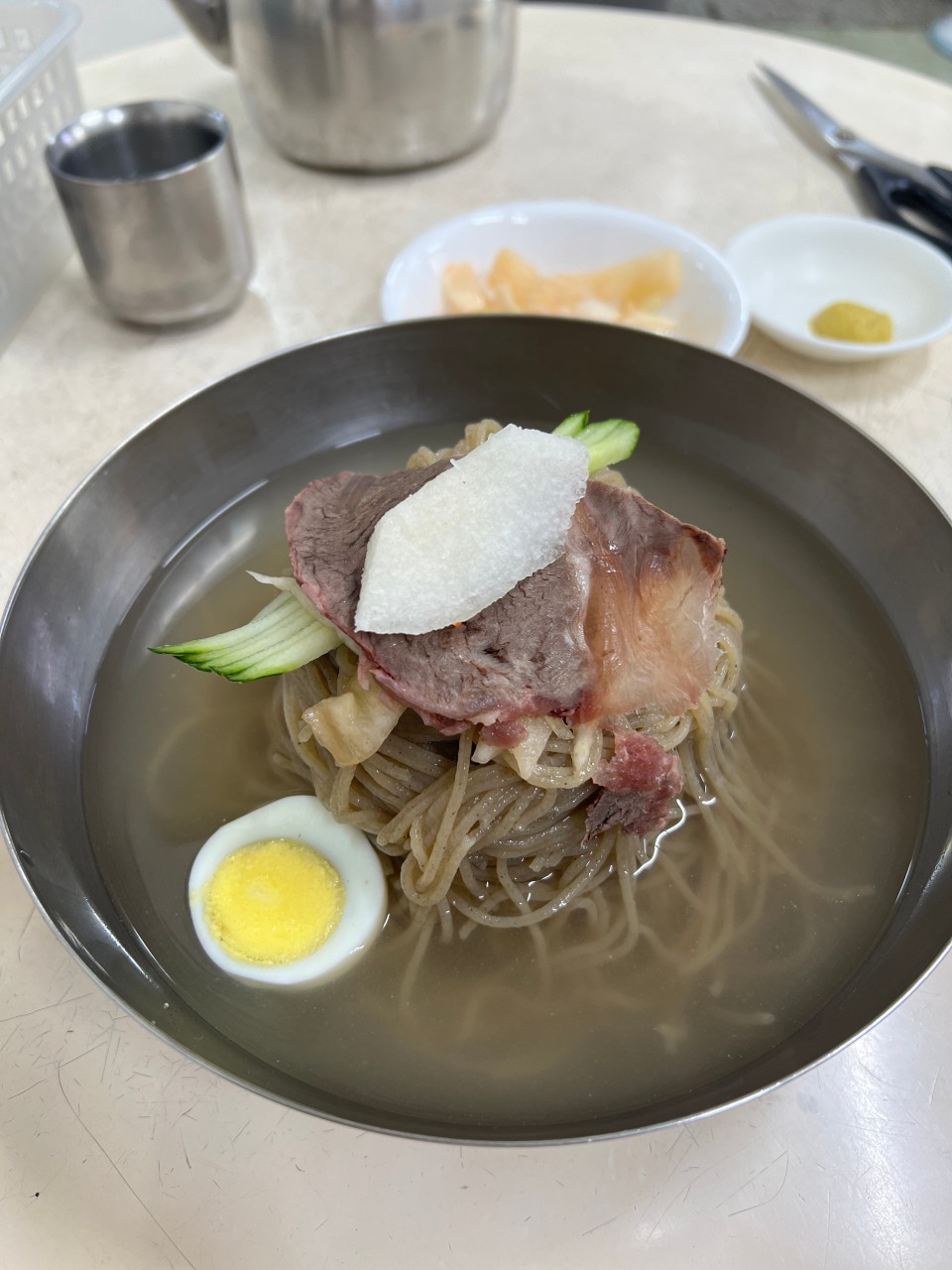
Intro
Naengmyeon (냉면) — Korea’s icy buckwheat noodle dish — had its biggest global moment in 2018, when North Korean leader Kim Jong-un joked about the “Pyongyang naengmyeon that came from afar” during the inter-Korean summit and had his own noodle chef fly it in for lunch. Within hours, lines formed outside Pyongyang-style naengmyeon restaurants all over Seoul. That’s not a drama plotline — it actually happened, and it tells you everything about how seriously Koreans take this dish. If you’re heading to Seoul and want to know exactly where locals go for the best naengmyeon restaurants in Seoul, here are six spots worth the trip, plus how to order without fumbling the menu.
Quick Info Box
| Restaurant | Nearest Station | Hours | Price Range | English Menu |
|---|---|---|---|---|
| Eulmildae (을밀대) | Daeheung Stn (Line 6), Exit 2 | 11:00–22:00 (last order 21:30) | ₩16,000– | Limited, pictures usually help |
| Woo Lae Oak (우래옥) | Euljiro 4-ga Stn, Exit 4 | Varies by day, closed some Mondays | ₩16,000–35,000+ | Yes |
| Eulji Myeonok (을지면옥) | Jongno 3-ga / Euljiro area | Check current hours (relocated in 2024) | ₩14,000–20,000 | Limited |
| Pildong Myeonok (필동면옥) | Chungmuro Stn | Mon–Sat 11:00–20:20, closed Sun | ₩15,000–30,000 | Limited |
| Nampo Myeonok (남포면옥) | City Hall Stn / Euljiro-3ga | 11:30–22:00 (weekdays), 11:30–21:00 (weekends) | ₩13,000–25,000 | Limited |
| Ojangdong Heungnamjip (오장동 흥남집) | Euljiro 4-ga Stn | Check current hours | ₩15,000 (bibim-naengmyeon) | Limited |
Most of these places accept cards, but it’s smart to carry some cash — a handful of old-school myeonok spots still prefer it during rush hours.
What to Eat: Eulmildae (을밀대)
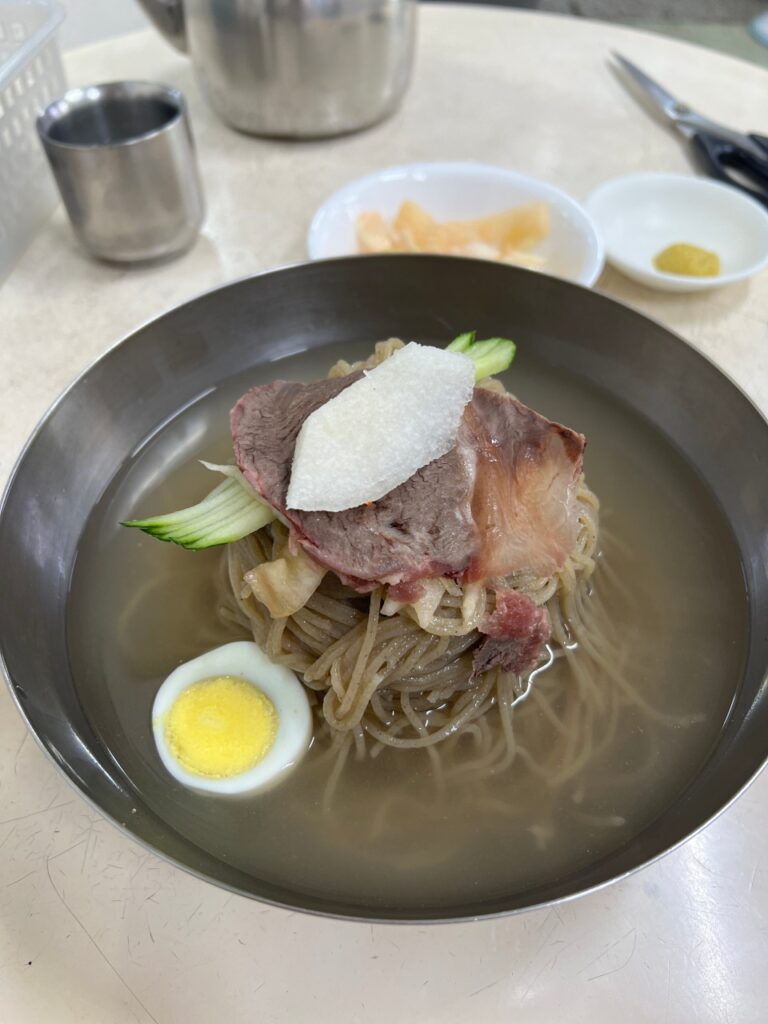
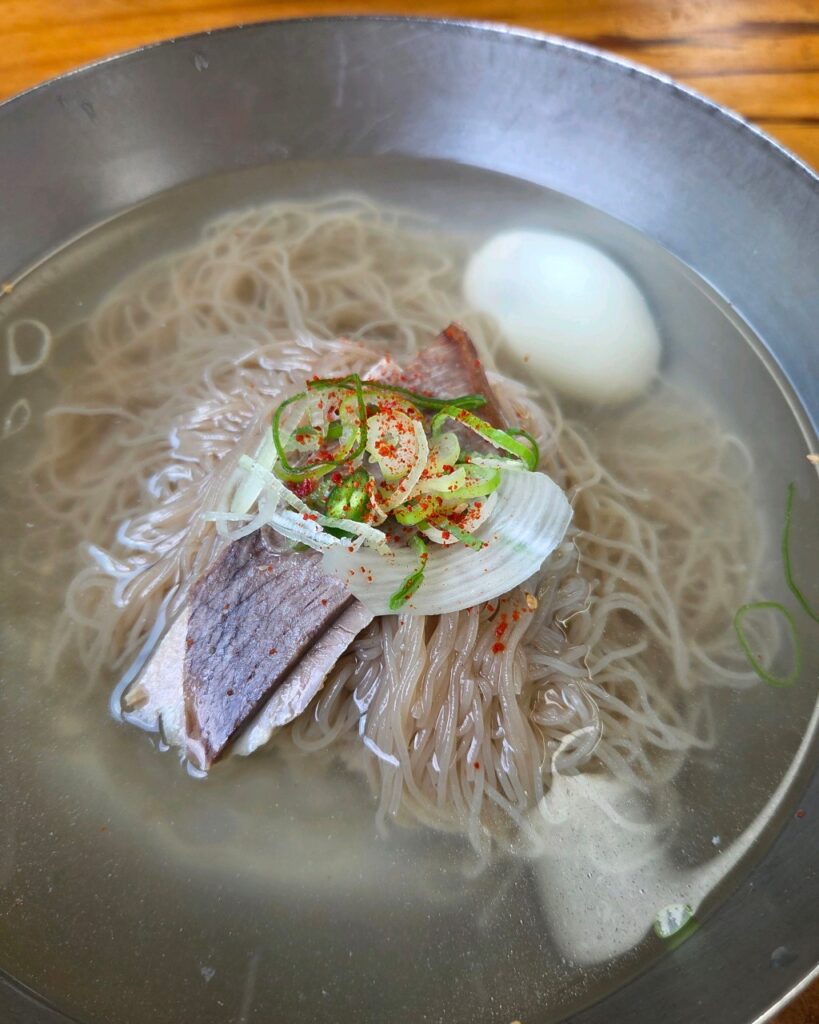
Eulmildae in Mapo is often called the number one naengmyeon spot in the city, and the line outside on a summer afternoon backs that up. It was started by a North Korean defector and is now run by his son, using hanwoo (Korean beef) broth and hand-pulled noodles. Order the mul-naengmyeon (물냉면) — the “wet” version served in cold, clear beef broth — and add a side of nokdujeon (mung bean pancake) if you want something warm to break up the cold.
How to order: Point at “물냉면” (mul-naengmyeon) if you want the classic broth version, or “비빔냉면” (bibim-naengmyeon) for the spicy, sauce-tossed one. Staff will usually ask if you want it “mild” or “spicy” — nod or say “an mae-wo-yo” (안 매워요, not spicy) if you’re heat-sensitive.
What to Eat: Woo Lae Oak (우래옥)
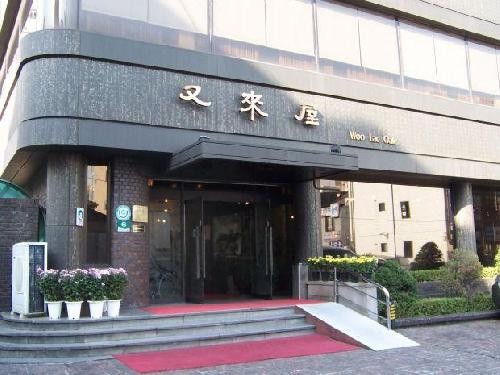
Running since 1946, Woo Lae Oak is considered the original Pyongyang-style naengmyeon restaurant in Seoul and leans more upscale than most on this list. The broth is deeper and meatier than the famously subtle Eulji Myeonok style, and the restaurant is also known for bulgogi and mandu (dumplings), so it’s a good stop if your group wants more than just noodles.
How to order: If you’re new to naengmyeon, this is a forgiving first stop — ask your server “How mild is it here?” and they’ll usually walk you through it, since staff are used to foreign visitors.
What to Eat: Eulji Myeonok (을지면옥)
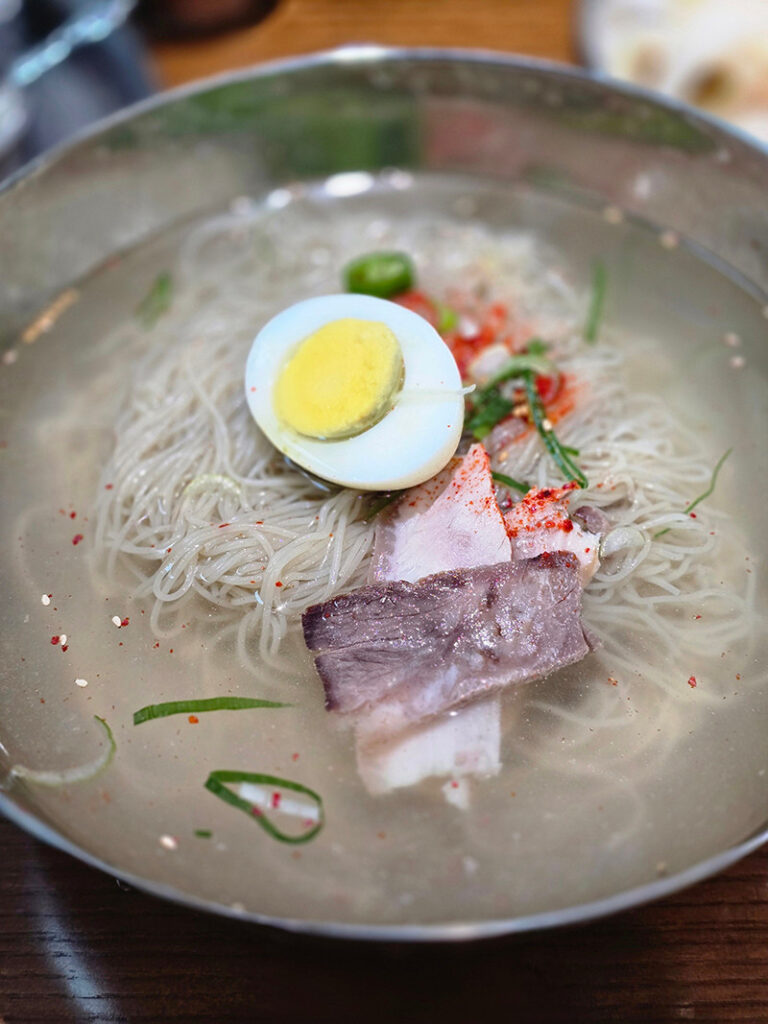
Eulji Myeonok is the reference point Seoulites argue about when they debate “real” pyeongyang-naengmyeon. The broth is built on dongchimi (radish water kimchi), which gives it a clean, almost bland-on-first-bite flavor that grows on you by the third mouthful. Locals will tell you not to add vinegar or mustard until you’ve tried a few bites plain — the broth is the whole point.
How to order: Skip the mustard and vinegar bottles at first. Try the broth on its own, then season to taste after a few bites — that’s how regulars do it.
What to Eat: Pildong Myeonok (필동면옥)
Tucked in Chungmuro, Pildong Myeonok is a neighborhood favorite for its clean, deep beef broth — a middle ground between Eulmildae’s richness and Eulji Myeonok’s minimalism. It’s also worth ordering the jeyuk (spicy grilled pork) or the mandu on the side if you’re hungrier than one bowl of noodles will fix.
How to order: The noodles come long and springy — restaurants provide scissors on the table for cutting them, which is completely normal and expected.
What to Eat: Nampo Myeonok (남포면옥)
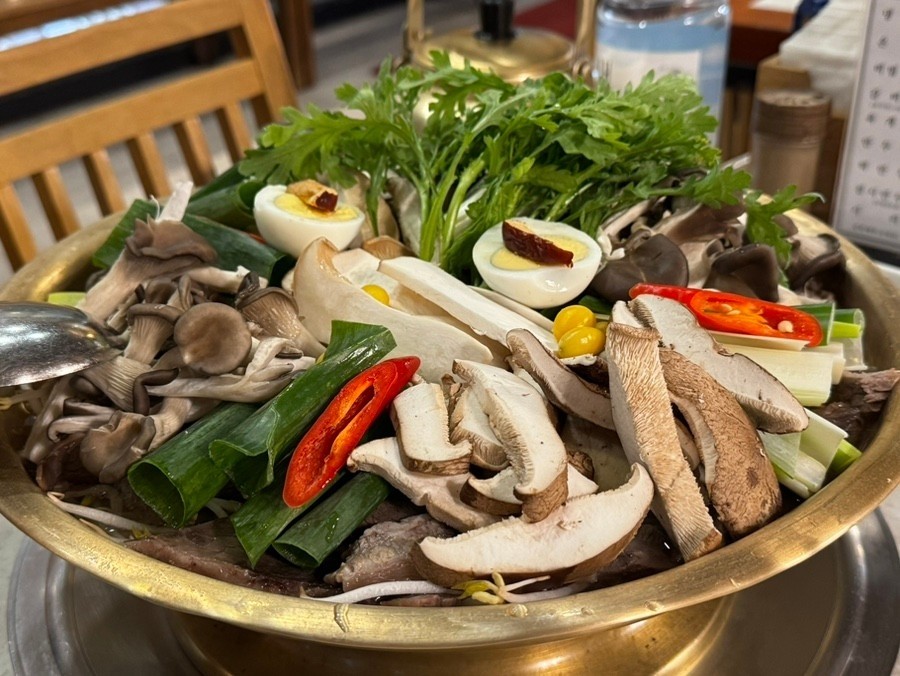
Near City Hall and Euljiro-3ga, Nampo Myeonok is known for pairing its naengmyeon with eobokjaengban (어복쟁반), a beef hot pot platter, making it a good pick if you want to sample a wider spread of Pyongyang-style dishes in one sitting rather than just noodles.
How to order: If you’re with a group, order one eobokjaengban to share alongside individual bowls of naengmyeon — it’s the local way to stretch a meal here.
What to Eat: Ojangdong Heungnamjip (오장동 흥남집)
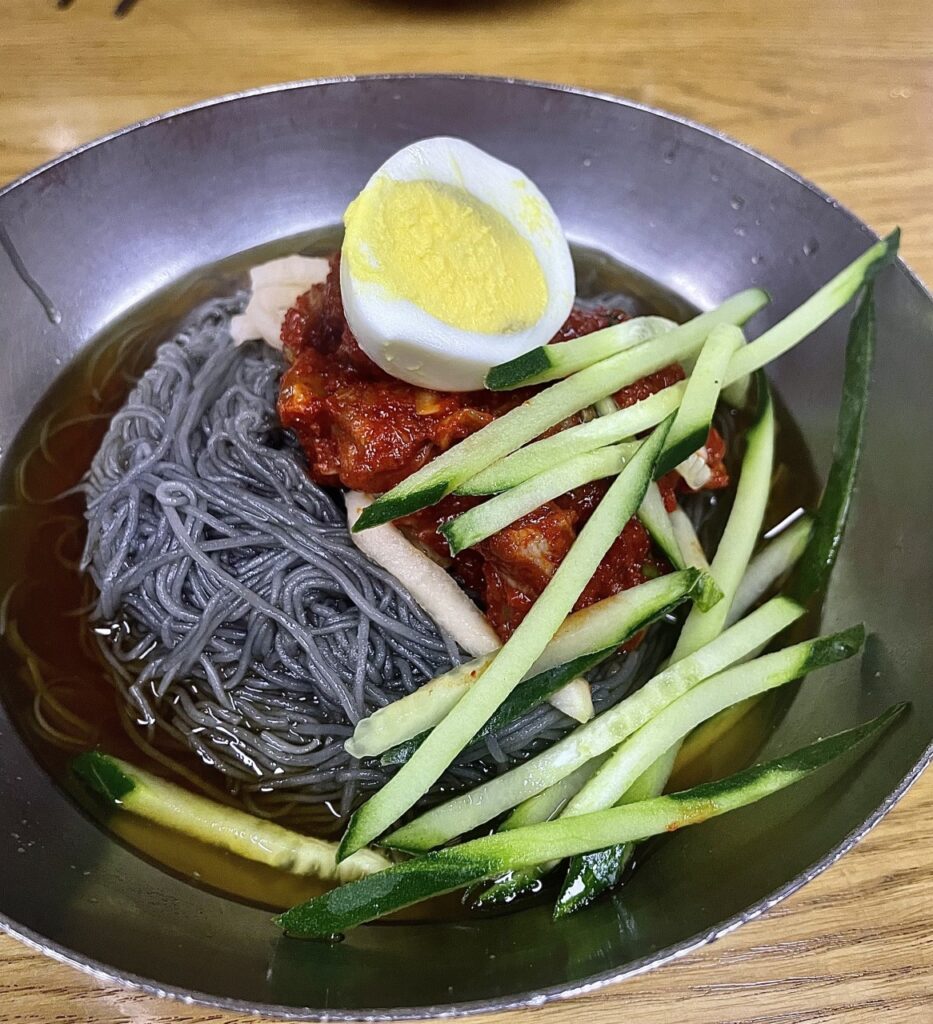
Everything above is Pyongyang-style mul-naengmyeon, which is subtle and broth-forward. If you want the other major style — Hamheung-style bibim-naengmyeon, which is spicy, chewy, and sauce-tossed rather than served in broth — Ojangdong Heungnamjip is where the whole naengmyeon-alley tradition in this neighborhood started, dating back to a vendor who fled from Hamheung during the Korean War. The noodles here are made from potato or sweet potato starch, so they’re noticeably chewier than the buckwheat noodles at the mul-naengmyeon places above.
How to order: This version is genuinely spicy by default — ask for it “less spicy” (delgi maewage, 덜 맵게) up front if you’re not used to Korean chili heat.
How to Get There
Nearly every restaurant on this list sits within a 10-minute walk of the Euljiro/Myeongdong/City Hall subway cluster (Lines 1, 2, 3, and 4), except Eulmildae, which is near Daeheung Station on Line 6 in Mapo. If you’re coming from Incheon Airport, take the AREX express train to Seoul Station, then transfer to Line 4 or a short taxi ride — most of these spots are 20–30 minutes from Seoul Station door to door.
Where to Stay Nearby
Staying around Myeongdong or City Hall puts you within walking distance of Eulji Myeonok, Woo Lae Oak, Nampo Myeonok, and Ojangdong Heungnamjip, plus easy subway access to everywhere else in the city. [HOTEL: hotels near Myeongdong, Seoul]
If you’d rather base yourself somewhere quieter with easy access to Eulmildae and the Hongdae nightlife area, look at stays around Mapo or Gongdeok Station instead.
[HOTEL: hotels near Gongdeok Station, Seoul]
Good to Know
- Expect a wait. The famous spots (Eulmildae, Woo Lae Oak, Eulji Myeonok) regularly have lines at lunch, especially in summer. Go before 11:30am or after 1:30pm to skip the worst of it.
- The broth is meant to be mild. If your first bowl of mul-naengmyeon tastes bland compared to what you expected, that’s not a bad batch — it’s the style. Bibim-naengmyeon is where the spice lives.
- Hours shift seasonally and some of these restaurants have moved locations in recent years (Eulji Myeonok relocated in 2024), so it’s worth double-checking hours on Naver Map the day you go.
- Portions are smaller than you’d think. A bowl of naengmyeon is often a starter-sized portion for Koreans — pairing it with mandu, jeyuk, or a hot pot dish is normal, not overordering.
- Cash still helps. Most places take cards now, but older, cash-preferred habits linger at some of the more old-school spots during peak hours.
FAQ
What is naengmyeon? Naengmyeon is a Korean cold noodle dish made with thin buckwheat or starch noodles, served either in a cold savory broth (mul-naengmyeon) or tossed in a spicy sauce (bibim-naengmyeon). It’s especially popular in summer as a way to cool down.
Is naengmyeon spicy? Mul-naengmyeon (the broth version) is not spicy — it’s savory and slightly tangy. Bibim-naengmyeon (the sauce-tossed version) is spicy by default, so ask for it mild if you’re not used to Korean chili heat.
What’s the difference between mul-naengmyeon and bibim-naengmyeon? Mul-naengmyeon is served in cold broth and traces back to Pyongyang-style cooking. Bibim-naengmyeon is served dry, tossed in a spicy gochugaru-based sauce, and traces back to Hamheung-style cooking. Most restaurants on this list specialize in one or the other, though some serve both.
Do I need a reservation? Most of these restaurants don’t take reservations for small groups — you just line up. For larger groups, it’s worth calling ahead, especially at Woo Lae Oak.