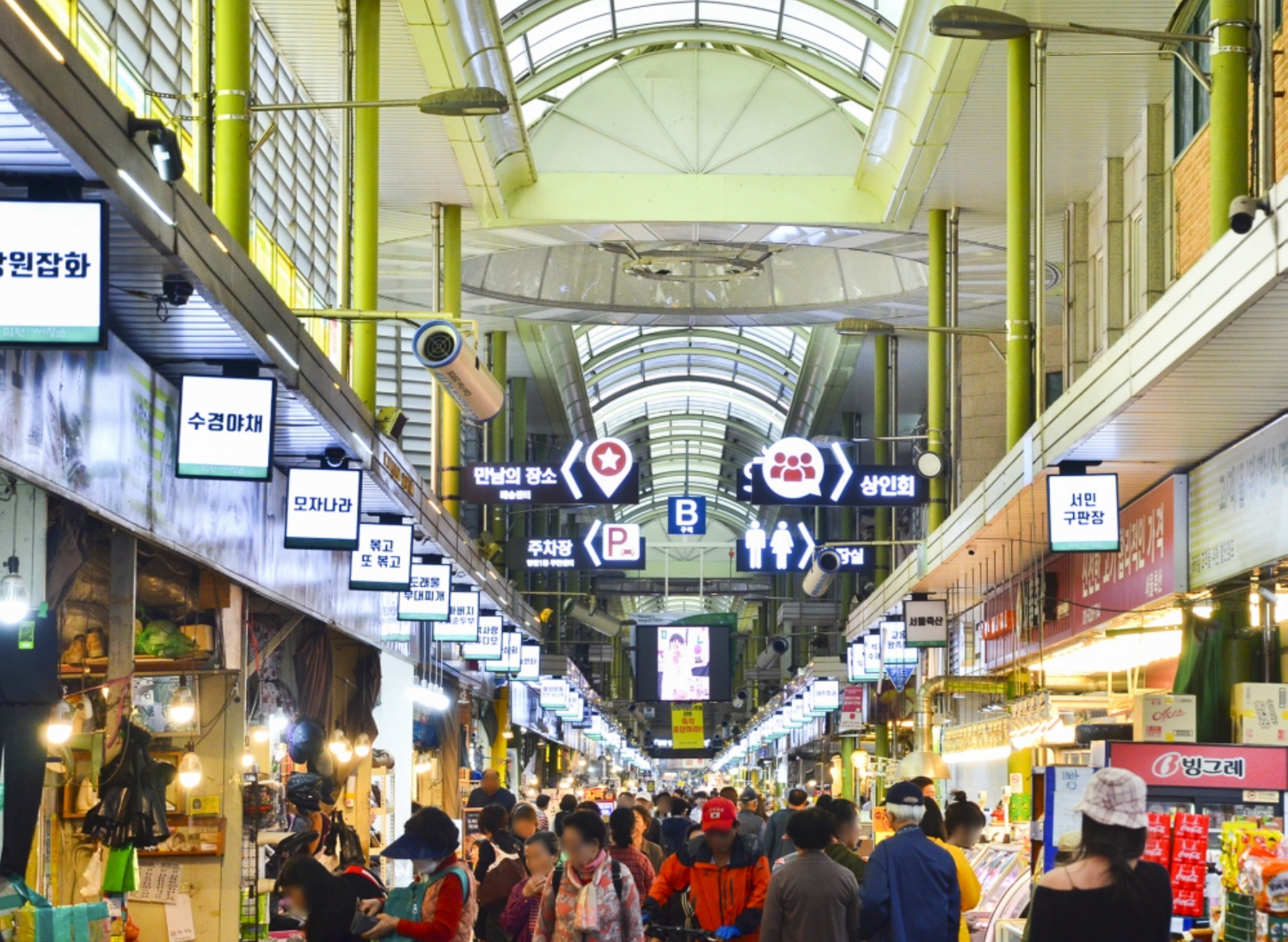
Mangwon-dong (망원동) sits one subway stop past Hongdae, and that one stop changes everything. There are no themed cafés built for photos, no English-language buskers, no queue of tour groups. It’s a residential neighborhood where people buy their vegetables, get their coffee, and walk down to the river after dinner.
That’s exactly why it’s worth a day of your trip. This guide covers what to eat, where to drink, how to reach the river, and where to stay — plus one scheduling trap that catches almost every visitor.
Quick Info Box
| Nearest station | Mangwon Station (망원역), Line 6 — one stop from Hapjeong, two from Hongdae |
| How long you need | A full day, or one long afternoon into evening |
| Budget | ₩30,000–50,000 per person including drinks |
| Cards | Accepted almost everywhere; market stalls prefer cash |
| English menus | Hit and miss — many small places are Korean-only with photos |
| Walkability | Everything below is within a 15-minute walk of the market |
First, the One Thing That Will Ruin Your Day
Mangwon-dong runs on independent shops, and independent shops close on their own schedules. Tuesday is the worst day to come. Heki, Kitami, Mandulan, and Guhwangjakmul are all closed. Monday takes out the hotteok stall and Heki. Wednesday closes The Beigel and Cuppacity.
The market itself is open daily, 9am to 9pm, so you’ll never come away hungry. But if you want the specific places below, come Thursday through Sunday.
Mangwon Market (망원시장)
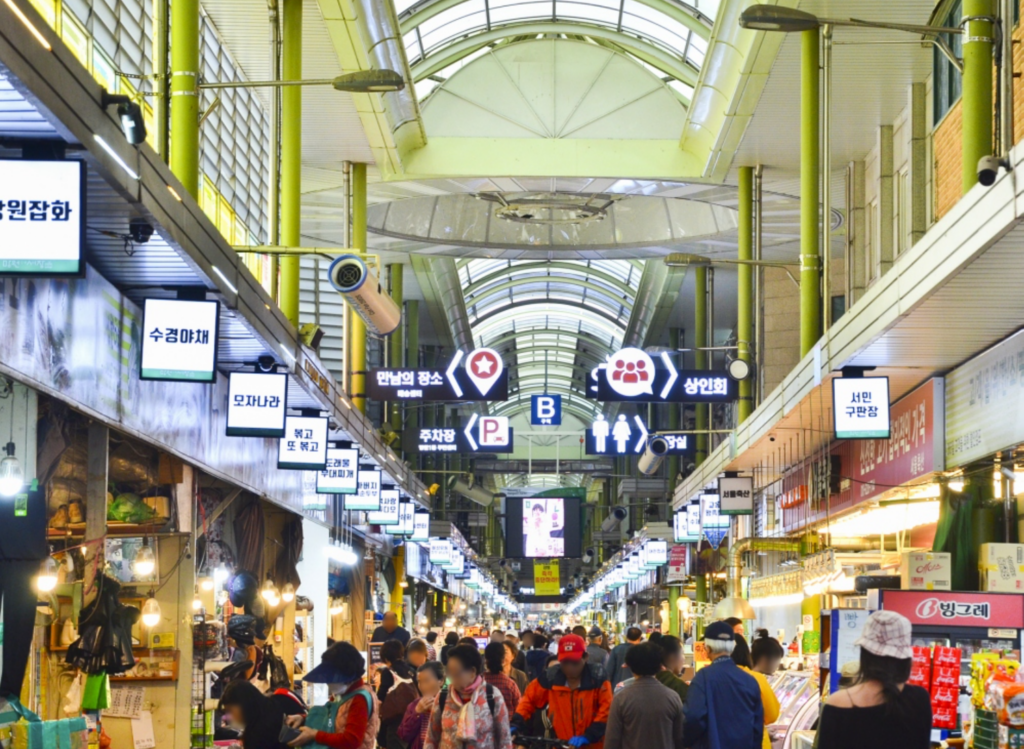
Start here. It’s a covered market wedged into a residential block, about a five-minute walk from Mangwon Station.
What makes it different from Gwangjang or Namdaemun is scale. It’s smaller, and the crowd is mostly people doing their actual grocery shopping. One visitor review put it well — you’re not navigating crowds here, you’re just wandering and finding things. Prices reflect a neighborhood market rather than a tourist one.
Go around 10am on a weekday. The stalls are fully stocked, the lunch rush hasn’t hit, and you can walk the length of it twice without getting pushed along.
What to get: croquettes from the fried-food stalls, tteokbokki (떡볶이), fresh-cut fruit, and whatever the ajumma in front of you is buying.
HoonHoon Hotteok (훈훈호떡)
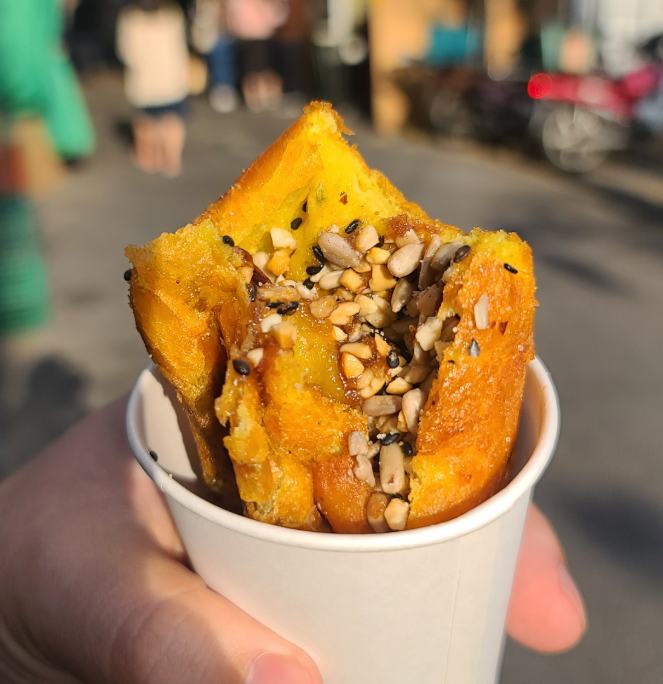
Inside the market, down in the basement level. Hotteok (호떡) is a griddled pancake stuffed with melted brown sugar, and these are pressed to order.
Two ordering notes. First, the cheese-powder version is the crowd favorite but splits opinion hard — several visitors found it overwhelmed the pancake. The original and the injeolmi (인절미, roasted soybean powder) versions get more consistent praise. Second, the sugar filling comes out molten. Bite the edge first. People have burned their hands on this.
Closed Mondays.
Where to Actually Eat
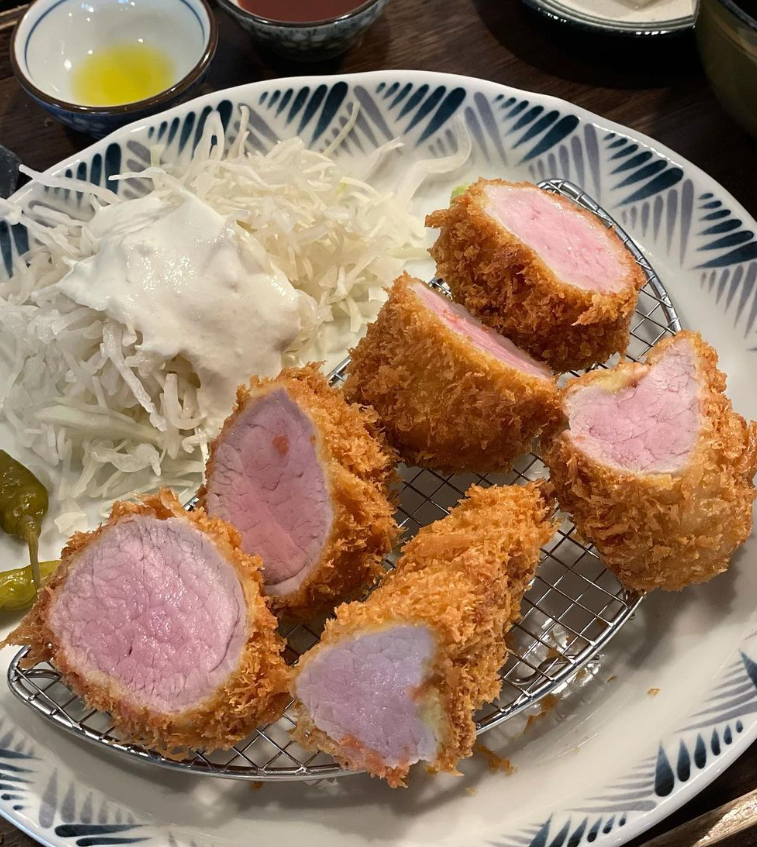
Heki (헤키) — tonkatsu
The single most praised restaurant in the neighborhood, with a 4.5 rating across 441 reviews and a lot of “best tonkatsu in Seoul” language from foreign diners. Around ₩11,000 for a sirloin cutlet, served with salt and multiple dipping sauces rather than drowned in one.
Important: the queue runs through an online waitlist that generally requires a Korean phone number. If you don’t have one, go right at opening (11:30am) or accept that you may need a backup. Closed Monday and Tuesday.
Kitami (키타미) — yakisoba and Neapolitan pasta
Ten bar seats. That’s the whole restaurant. It sits in front of an elementary school gate, and the reviews are full of people saying they pass it constantly because they live nearby — which is about as good a local-credibility signal as you get.
The deluxe yakisoba (around ₩12,500) and the Japanese-style Neapolitan pasta are the two things to order. Closed Tuesdays.

Mandulan (만들란) — Chinese dumplings
The value pick. One group reported twelve dumplings, two mains, and two drinks for ₩40,000 total. The braised pork belly gets repeat praise. Not a stylish room — one review flagged weak air conditioning in summer — but the food does the work. Closed Tuesdays.
Taco Dot — when you need a break from Korean food
I’m including this deliberately. Taco Dot holds a 5.0 rating across 382 reviews, which is extraordinary, and its reviews are full of long-term foreign residents who clearly treat it as home base. If you’re four days into a Korea trip and your palate needs a reset, this is the place. Open daily, 11:30am–3pm and 5–10pm.
Coffee, Which Mangwon Takes Seriously
This neighborhood has a genuinely strong independent coffee scene, and none of it is built for Instagram.
- Cuppacity — bright, minimal, opens at 8am most days. The owner talks through roasts and origins in English. Closed Wednesdays.
- PP Coffee (피피커피) — hand-drip specialist who roasts in house. Open 9am–7pm daily, which makes it the most reliable option when everything else is closed.
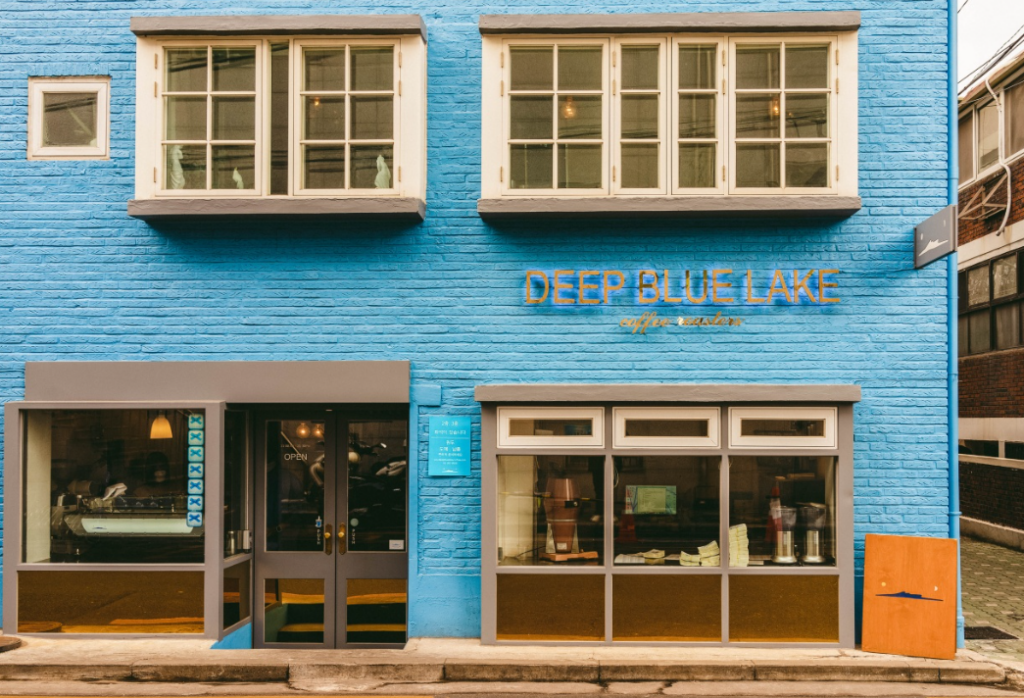
- Deep Blue Lake — a roastery right by Mangwon Market’s Gate 1, so it slots naturally after the market. Essentially a one-person operation; the stairs are narrow, so get your seat before you order.
- The Beigel (더 바이글) — proper bagels, not the soft Korean interpretation. Salt beef around ₩14,000. Closed Wednesdays.
- Guhwangjakmul (구황작물) — a brunch-and-cheesecake café tucked into a residential street. Small, and only open Thursday through Monday, 11am–6pm.
Mangwon Hangang Park (망원한강공원)
A ten-minute walk from the market, and the reason to stay into the evening.
Every Han River park has the same basic offer — grass, bike paths, convenience stores with ramyeon (라면) machines. What Mangwon has is a lower tourist ratio. Reviewers consistently describe it as calmer and more community-feeling than Yeouido or Banpo, with the Seongsan Bridge view anchoring the skyline after dark.
Buy your ramyeon, an egg, and a pack of kimchi at the convenience store, cook it at the machine, and eat by the water. Picnic mats and gear are rentable near the park entrance. It’s open 24 hours.
Sunset gets busy on weekends — arriving 45 minutes early makes the difference between a riverside spot and a patch behind everyone else.
Here’s Han River ramyeon, how to do it without embarrassing yourself:
After Dark
Namine Pojangmacha (남이네 포장마차) is an indoor pojangmacha (포장마차) that reviews describe as a Mangwon regulars’ spot, with a wait forming from around 7pm because the room is small. Kimchi jeon, kimchi ramyeon, grilled fish. It’s the most locally-rooted place in this guide and also the least documented online — hours aren’t posted, so treat it as a bonus rather than a plan.
danbar seoul (단바) is the easier option: a cocktail bar open 7pm to 5am, every night. Foreign visitors repeatedly mention it as somewhere you can strike up a conversation without speaking Korean. Good landing spot for solo travelers.
Where to Stay in Mangwon
Here’s the honest version: Mangwon-dong has almost no hotels. It’s residential, so lodging means guesthouses and small independent stays. If you want a proper hotel, you stay one stop away in Hapjeong or two in Hongdae and commute in — which takes about four minutes.
Staying in Mangwon itself (guesthouse territory):
- K-WON Stay — inside the neighborhood, 24-hour self-service laundry, strong reviews from longer-stay guests
- Apple Tree Guest House — five minutes from Mangwon Station, dorms and private rooms, shared kitchens, walkable to Hongdae in about fifteen
If you want a hotel (Hapjeong, one stop away):
Hapjeong sits between Mangwon and Hongdae and has the actual hotel inventory, including chains and mid-range business hotels. You get lifts, front desks, and daily housekeeping, and you’re still a four-minute ride from the market.
hotels near Hapjeong Station, Seoul
If you want nightlife on your doorstep (Hongdae, two stops):
Hongdae has the widest range of price points in this part of the city — hostels through to design hotels. It’s louder, and that’s the trade. Two subway stops back to Mangwon whenever you want quiet.
Budget tip: filter for properties within about 800m of Mangwon or Hapjeong Station. West Seoul is well connected, but this stretch of Line 6 is a walk-first neighborhood, and anything further out means hills.
Good to Know
- Come Thursday to Sunday. Tuesday closes four of the places above.
- Bring cash for the market. Cards work at most stalls, but small bills move the line.
- Mornings for the market, evenings for the river. The middle of the day is for coffee.
- Small rooms, small counters. Kitami has ten seats; several cafés seat under fifteen. Solo or pairs travel easiest here.
- This is someone’s neighborhood. Residential streets, actual homes, people going about their day. Keep your voice down in the alleys.
- Verify hours the morning of. Independent shops change schedules and take irregular holidays. A quick map check saves a wasted walk.
FAQ
Is Mangwon-dong worth visiting if I only have three or four days in Seoul? Yes, if you pair it with Hongdae or Hapjeong for a single day in west Seoul. Half a day at the market and river costs you very little and gives you a completely different texture from Myeongdong or Gangnam.
Do I need Korean to eat here? It helps but isn’t required. Larger places have photo menus and kiosks with an English toggle. At market stalls, pointing works. Cuppacity’s owner speaks English, and danbar is used to foreign guests.
Is Mangwon Market better than Gwangjang Market? Different, not better. Gwangjang is bigger, more famous, and built to handle tourists. Mangwon is smaller, cheaper, and mostly locals doing their shopping. Do Gwangjang for the spectacle and Mangwon for the everyday version.
Can I get to Mangwon Hangang Park from the market on foot? Yes, about ten minutes on flat ground. That short walk is the main reason to build your day around this neighborhood — market to river with no transfers.