Most Seoul K-drama filming locations guides hand you a list of 25 spots scattered across the city and leave you to figure out the subway. This one is a route. Three days, grouped by neighborhood, with a specific thing to eat at every stop — because half the scenes you’re chasing involve food anyway.
Nothing here needs a car or a tour guide. Every stop is on the subway, and most of them are free public streets and parks. Total food budget runs roughly ₩25,000–40,000 per person per day if you eat the way I’ve laid it out.
Quick Info Box
| Base area | Jongno 3-ga or Myeongdong (central, on multiple lines) |
| Transport | Subway only. Get a T-money card or the Climate Card at any station |
| Daily food budget | ₩25,000–40,000 per person |
| Cards accepted? | Yes almost everywhere, but market stalls are faster with cash |
| English menus | Common in Myeongdong and Ikseon-dong, rare at market stalls |
| Best season | Spring and autumn. Han River picnics are miserable in January |
Day 1: Jongno — Palaces, Hanok Alleys, and the Market Everyone Films In
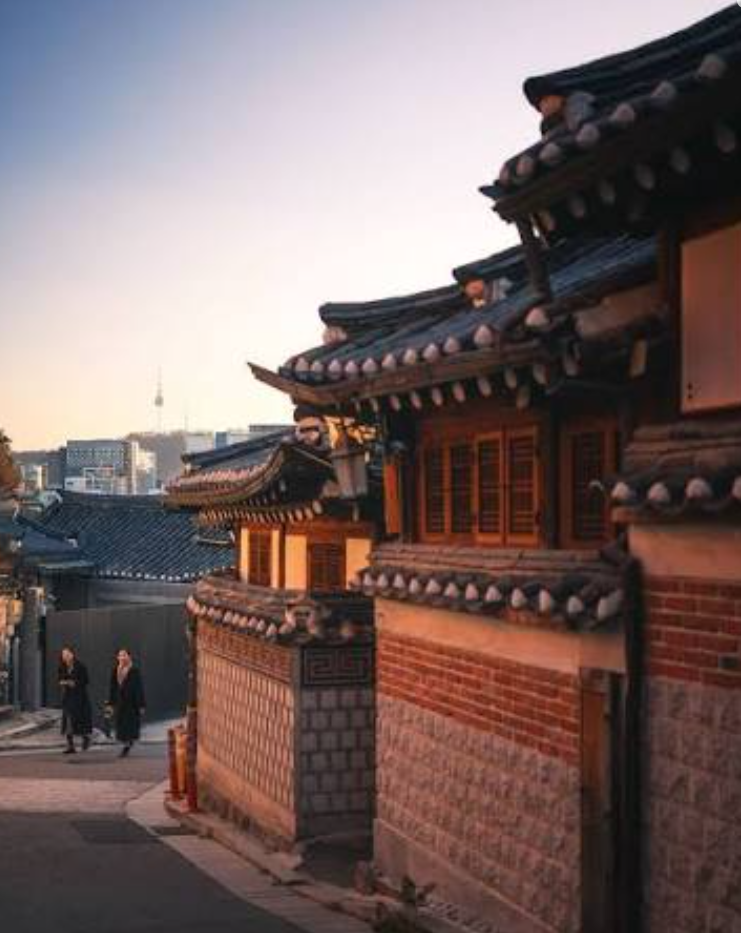
Morning: Bukchon Hanok Village (북촌한옥마을)
Start at Anguk Station, Exit 2. The steep alley of tiled rooftops you’ve seen in a dozen shows — most famously Boys Over Flowers — is a five-minute uphill walk from there.
One thing to understand before you go: people actually live here. There are signs asking visitors to keep quiet, and residents have gotten vocal about the crowds. Come on a weekday before 10am and you’ll get both a better photo and a clearer conscience.
Lunch: Tongin Market (통인시장) yeopjeon dosirak
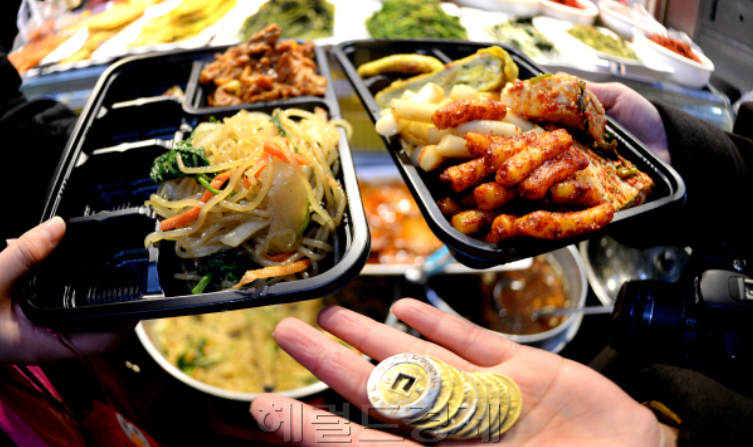
Walk or take one stop to Gyeongbokgung Station and head for Tongin Market. This is the best lunch in Seoul for a first-timer who can’t read a menu yet.
Here’s how it works. You buy brass coins called yeopjeon (엽전) — around ₩5,000 gets you ten — plus an empty lunch tray. Then you walk the market and trade coins for portions at any participating stall: fried tteokbokki, jeon, mini gimbap, fried chicken. You point, you hand over coins, you get food. No Korean required.
Worth confirming before you go: the coin counter keeps shorter hours than the market itself and takes a weekly day off, so check the current schedule the morning of.
Afternoon: Deoksugung Stone Wall Road (덕수궁 돌담길)
A fifteen-minute walk south. This curved path along the palace wall has been here for centuries, but Goblin is why it’s on your list. It’s free, it takes twenty minutes, and it connects neatly to Cheonggyecheon Stream — the sunken walkway through downtown that has hosted an absurd number of on-screen conversations.
Dinner: Gwangjang Market (광장시장)
Jongno 5-ga Station. Gwangjang opened in 1905 and the food alley is the most internationally recognizable market food scene in Korea — it’s the one Netflix’s Street Food: Asia put on the map.
Three things to order:
- Bindaetteok (빈대떡) — thick mung bean pancakes fried on flat iron griddles. Around ₩5,000–8,000. Get it with a bowl of makgeolli (막걸리), which is the pairing locals default to.
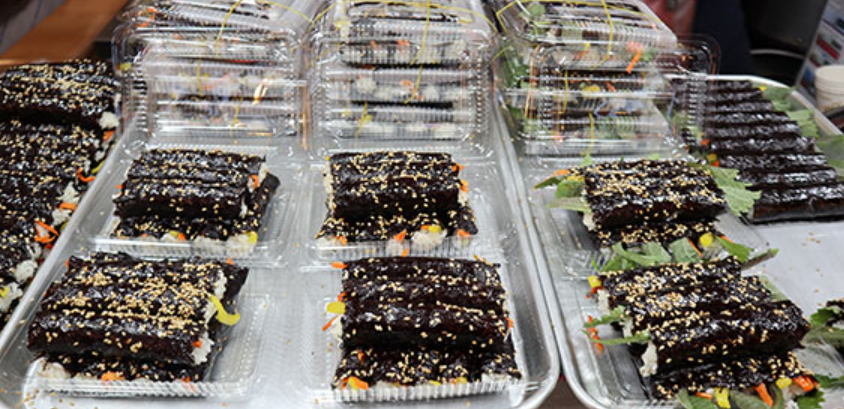
- Mayak gimbap (마약김밥) — thumb-sized rice rolls you dip in a mustard-soy sauce. A plate of ten runs about ₩3,500.
- Yukhoe (육회) — raw beef tartare with sesame oil and a raw yolk on top. ₩15,000–20,000, and Gwangjang is the most famous place in the country to eat it.
One honest warning. Gwangjang had a well-publicized overcharging problem with tourists a couple of years back, and it cost the market a lot of local goodwill. It’s still absolutely worth going — just look at the posted price before you sit down, and confirm what you’re being charged for. Prices are fixed and posted; there’s no haggling on food.
The fabric stalls shut around 6pm but the food alley runs late, often past 11pm. Lunch on a weekday (11:30am–1:30pm) is the calmest window if crowds stress you out.
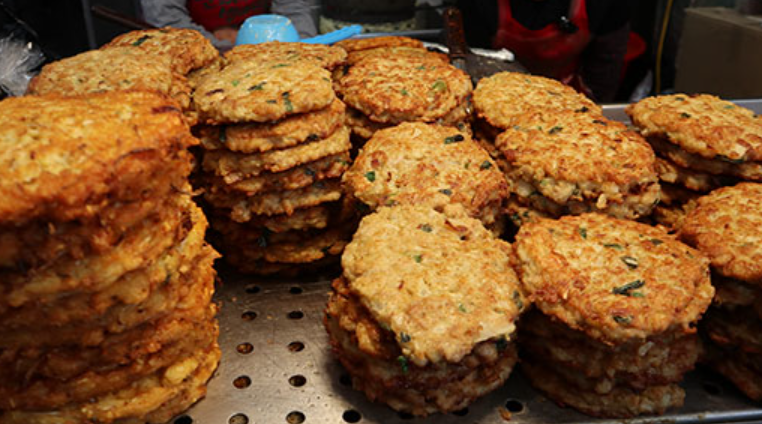
[IMAGE: bindaetteok on the griddle, batter hitting oil]
Where to Stay: Jongno
Staying around Jongno 3-ga puts Day 1 entirely on foot and Days 2 and 3 within two subway transfers. It’s also the most walkable late-night neighborhood in the guide.
HOTEL: hotels near Jongno 3-ga Station, Seoul
Day 2: South Seoul — Squid Game Stops and a River Picnic
Morning: Yangjae Citizen’s Forest Station (양재시민의숲역)
Shinbundang Line. This is the underground corridor where Gi-hun gets talked into a game of ddakji in episode 1 of Squid Game, and fans now come to recreate the card-flip photo on the platform.
A note on accuracy, because guides disagree: most travel sites name Yangjae Citizen’s Forest Station, while Netflix’s own location guide points to Seoul Forest Station in Seongdong District. Yangjae is the one fans actually visit and photograph, but if you’re a completist, both are cheap to add.
Either way, treat it as a ten-minute stop and avoid rush hour (7–10am, 5–7pm). It’s a working commuter station, not an attraction.
Midday: Olympic Park (올림픽공원)
Line 5 or 8 to Olympic Park. The giant Young-hee doll replica installed on the 88 Grass Field became the single most photographed Squid Game pilgrimage site in the world. The park is huge and pleasant, so budget two hours if the weather’s good.
Eat lunch here from a convenience store or a park café. Save your appetite — the evening is the point.
Evening: Han River ramyeon (한강 라면)
This is the one activity every K-drama fan should do, and it costs about ₩6,000.
Go to a Hangang park with a convenience store — Yeouido (Yeouinaru Station, Exit 2) and Ttukseom are the two easiest. Inside the store you’ll find automatic ramyeon machines that boil the noodles for you at the right temperature.
How to do it without embarrassing yourself:
- Pick a ramyeon packet. Shin Ramyun is standard; Jin Ramen Mild if you can’t handle heat.
- Tell the staff you’re eating in so they sell you the foil cooking bowl.
- Dump in the noodles and the seasoning powder. Do not add the egg yet — it sticks and burns and can jam the machine.
- Set the bowl on the induction plate, press the ramyeon button. Water dispenses automatically. Don’t move the bowl.
- When the timer shows about a minute left, stir, then crack the egg in.
Grab kimchi and a sausage from the fridge while you wait. Then eat it outside looking at the river, which is genuinely the whole appeal and somehow does taste better.
If you want to recreate it at home later:
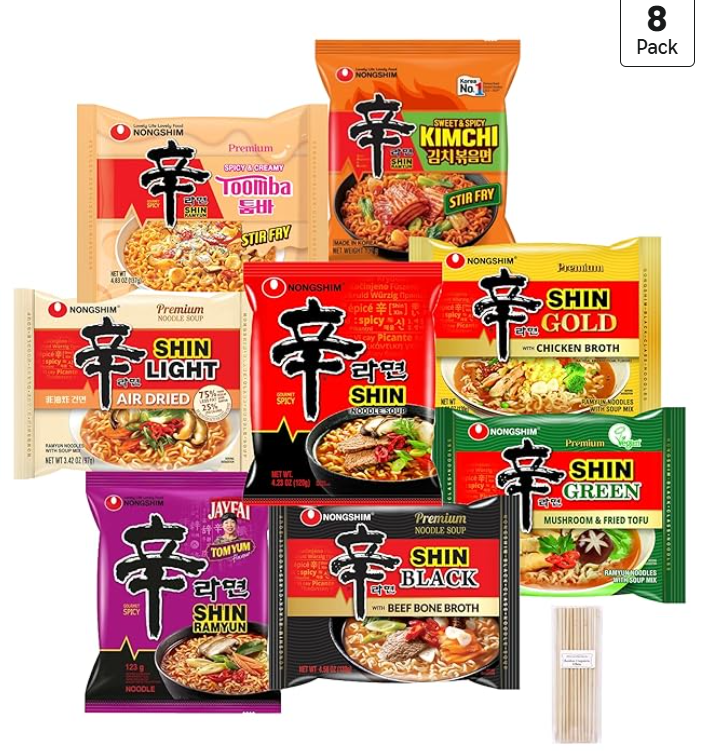
[AMAZON: Shin Ramyun multipack]

Automatic Instant Ramen Cooker, Han River: ramyeon machine on the counter, foil bowl steaming
Day 3: Naksan to Namsan — Murals, Hanok, and the Tower
Daehangno (대학로)
You’re in a student neighborhood, which means cheap and good. Any bunsik (분식) shop will do tteokbokki, gimbap, and fried snacks for under ₩10,000. Look for a place with a photo menu or a kiosk — most kiosks have an English toggle in the top corner.
Namsangol Hanok Village (남산골한옥마을)
Chungmuro Station, Line 3 or 4. Free entry, restored hanok buildings, and a pavilion pond that period-drama viewers recognize immediately. It’s the most accessible traditional village in central Seoul and it takes about an hour.
Namsan Park and N Seoul Tower (남산서울타워)
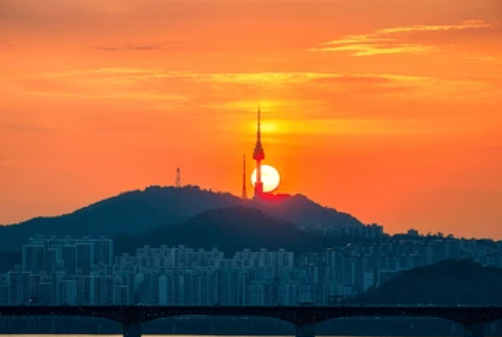
Walk up through the park or take the cable car. Namsan Park appears across countless dramas, Squid Game included, and the tower is the skyline shot in roughly every establishing sequence ever filmed in this city.
Go up for sunset. The ticket line is shortest right before the light changes and unbearable right after.
Dinner: Myeongdong street food
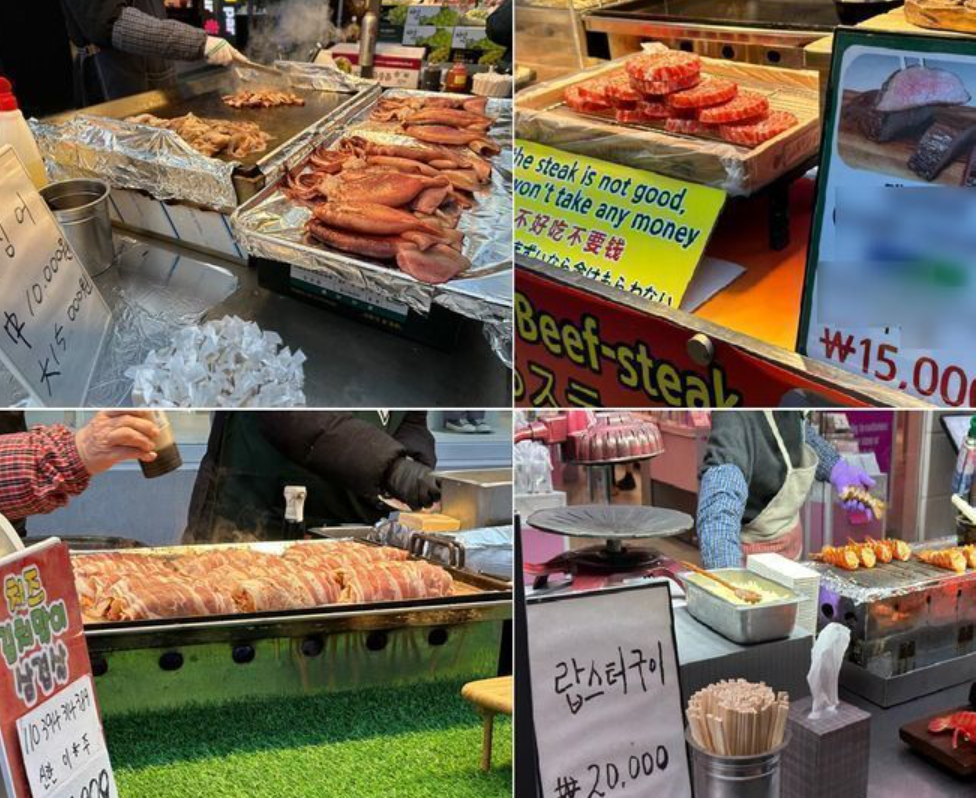
Ten minutes downhill. Myeongdong is touristy and priced accordingly, but it’s the easiest street food in the city to order — English menus everywhere, cards accepted, cart prices posted. Egg bread, tornado potato, grilled cheese lobster if you’re feeling silly. It’s a fine last night.
HOTEL: hotels in Myeongdong, Seoul
Good to Know
- Get a transit card first thing. T-money or the Climate Card, available at any station. Tapping is faster than buying single tickets and works on buses too.
- Carry some cash. Market stalls take cards but the line moves faster with ₩10,000 notes.
- Filming location signs are rare. Most spots are unmarked on purpose. Save screenshots on your phone so you can line up the angle yourself.
- Weekday mornings beat weekend afternoons everywhere in this itinerary. Bukchon, Gwangjang, and Ihwa are all dramatically calmer.
- These are neighborhoods, not sets. Bukchon and Ihwa in particular have residents who’ve had a rough decade of this. Be the visitor they don’t complain about.
- Want it done for you? If three days of subway navigation sounds like work, guided K-drama location tours typically cover five to eight sites in a single day. [TOUR: K-drama filming locations day tour Seoul]
FAQ
Can I do this itinerary without speaking Korean? Yes. Subway signage and announcements are in English, kiosks have an English option, and the Tongin Market coin system is designed around pointing. Market stalls are the only place you’ll need gestures, and gestures work fine.
Which single day should I pick if I only have one? Day 1. Bukchon, Deoksugung, and Gwangjang give you the highest density of recognizable locations plus the best food, all within one district.
Are the filming locations actually marked? Usually not. Major tourist sites sometimes have photo zones or signage, but most locations are ordinary streets and stations that were never labeled. That’s part of why they still look like they do on screen.
Is Gwangjang Market still worth visiting after the pricing controversy? Yes, with your eyes open. Check the posted price before ordering and confirm the total. The food and the atmosphere are still the best market experience in Seoul.
This post contains affiliate links. If you buy through them, I may earn a small commission at no extra cost to you.